



die Qualität der gelieferten Produkte sind sehr gut. Das Bestellen und liefern war problemlos, sehr schnell und das Personal sehr freundlich.
Coasters Eublepharis macularius Blood - Tassenkasper
Sale price
€5,40
Tax included
Shipping calculated at checkout
Benefits at a Glance
- Matching exotic motif for the mug
- Stable base for everyday use & desk
- Small gift for terrarium enthusiasts
Eublepharis macularius Blood Coaster – practical coaster for reptile lovers, terrarium enthusiasts, and animal fans. The surface features an Eublepharis macularius Blood design (Leopard Gecko "Blood") and protects surfaces from scratches and stains – suitable for coffee cups, glasses, and bottles.
Why this coaster is a great choice:
– Striking reptile motif: High-quality print of Eublepharis macularius Blood
– Protects surfaces: from stains and scratches in daily use
– Dimensions: 90 x 90 mm
– Material: Hardboard, 3 mm thick
– Surface: glossy
Product Details
Dimensions:
90 x 90 mm.
Material:
Hardboard, 3 mm thick.
Surface:
Glossy with high-quality print.
Motif:
Eublepharis macularius Blood – Leopard Gecko "Blood".
Fun Fact: Eublepharis macularius Blood are reptiles; they regulate their body temperature using their surroundings.
Scope of delivery
– 1× Coaster with Eublepharis macularius Blood motif
Matching the coaster, there is also the motif mug in the same design.
Safety Instructions
This product is a coaster for cups, glasses or similar items for indoor use. Do not use as a toy and keep out of reach of small children.
Do not continue to use damaged coasters with cracks, sharp edges, chips or loose components. For delicate surfaces, check if the coaster is suitable before use.
Clean only dry or lightly damp. Do not expose to continuous moisture, strong heat or open flames.
Manufacturer:
Tassenkasper GmbH
Eugen-Kübler-Straße 8
74538 Rosengarten
Germany
Email: info@tassenkasper.de
How big is the coaster?
The coaster measures 90 x 90 mm.
What material is it made of?
Made of hardboard (3 mm thick).
What is it suitable for?
For cups, glasses, and bottles – protects surfaces from stains and scratches.
What motif is shown?
The motif shown is Eublepharis macularius Blood – Leopard Gecko "Blood".
Blog posts
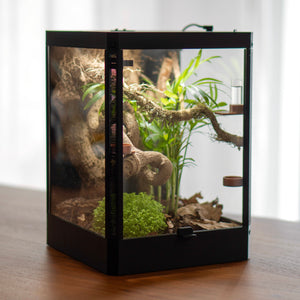
BioFaunaCube: Modular terrarium for keeping and breeding
BioFaunaCube at a glance: Which size fits your project, how does the modular system work, and which accessories make sense?
Read more
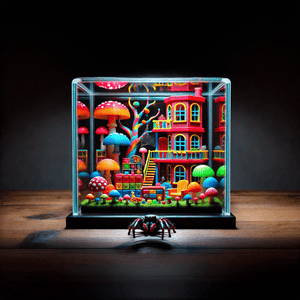
When the Terrarium Turns Into a Dollhouse: Why Kitschy Mini-Furniture, 3D Trees, Backdrops & More Can Harm Animals
Animals are living beings, not accessories. Yet, more and more products on the market resemble items meant for a dol...
Read more
Breeding Drosophila: Guide to Stable Cultures
Drosophila breeding made easy: How to set up fruit fly cultures cleanly, organize them sensibly, and feed them in a controlled way.
Read more