

Cubaris spec. “White Side”
Sale price
€17,99
Tax included
Shipping calculated at checkout
Benefits at a Glance
- 10 animals + 1 free when you start
- For Isopod Boxes & Bioactive Terrariums
- Powerful addition to your ground police
Cubaris spec. "White Side" – tropical ornamental isopod for the terrarium with a dark body and strikingly light sides. This Cubaris species is particularly popular due to its clear light-dark contrast, compact size, and relatively manageable keeping requirements. It is suitable for humid isopod terrarium setups, terrariums, and structured bioactive enclosures.
What makes Cubaris spec. "White Side" special:
– Striking contrast pattern: dark body with light sides and a conspicuous overall appearance
– Compact size: well-suited for structured isopod boxes and smaller terrariums
– Tropical Cubaris species: ideal for warm, humid keeping conditions
– Comparatively easy to keep: often cited as a good entry point for keeping tropical Cubaris
Climate & Setup:
A humic substrate with leaf litter, white-rotted wood, and hiding places like cork or bark has proven effective. A moisture gradient is important: one side or corner remains permanently moist, while the rest of the area is kept only slightly moist to moderately moist. Moss can help maintain stable humidity. Good ventilation is still important. A temperature range of approximately 22–26 °C is considered suitable.
Feeding & Care:
Leaf litter and rotten wood form the basis of their diet. Additionally, fresh food such as zucchini or carrots can be offered regularly. Small amounts of protein and a permanent calcium source like cuttlebone or lime are beneficial. Food remnants should be removed regularly.
Breeding & Development:
Cubaris spec. "White Side" is considered easy to breed and multiplies more reliably than many other Cubaris species under stable conditions. Consistent humidity, appropriate food, calcium, and a structured terrarium setup are crucial for good development.
Who this species is interesting for:
– for keepers looking for a striking tropical ornamental isopod
– for humid terrariums and isopod boxes with a stable microclimate
– for structured terrarium setups with leaf litter, wood, and a clear moist zone
– for isopod keepers who want to start keeping Cubaris species
Suitable Accessories:
For clean feeding and structured keeping, depending on the terrarium setup, an isopod dish, double isopod dish, or a suitable BioFaunaCube are appropriate.
| Experience | Humidity | Temperature |
|---|---|---|
| ★★☆☆☆ | high with humidity gradient | 22–26 °C |
For a clean start, an isopod box with quadruple ventilation, the isopod starter set, a fixed feeding station with an isopod dish, as well as isopod premium food and food & minerals for invertebrates are suitable.
Care & Usage Instructions
This offer concerns live isopods for terraristics. Animals are living organisms; appearance, size, and activity may vary slightly depending on species, age, temperature, and transport.
The suitability for the respective keeping, humidity, temperature, ventilation, and cohabitation is the responsibility of the keeper. Please check the animals promptly upon receipt and place them in a prepared, suitable box or terrarium.
Not for human consumption. Keep out of reach of children. Use only for the intended terraristic keeping.
Is Cubaris spec. "White Side" suitable for beginners?
The species is generally considered a comparatively easy-to-keep Cubaris, provided that temperature, humidity, and the structure of the terrarium setup remain stable.
What does Cubaris spec. "White Side" eat?
The basis is leaf litter and rotten wood. Fresh food, protein, and calcium are suitable as supplements.
What kind of keeping is sensible?
A warm, humid, and well-structured terrarium setup with leaf litter, wood, hiding places, and a clearly moist zone with overall good ventilation is sensible.
How quickly does the species multiply?
Cubaris spec. "White Side" is considered easy to breed. However, how quickly the colony grows strongly depends on climate, food, and the stability of the terrarium setup.
Blog posts
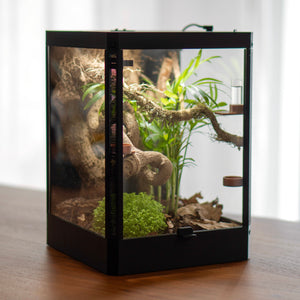
BioFaunaCube: Modular terrarium for keeping and breeding
BioFaunaCube at a glance: Which size fits your project, how does the modular system work, and which accessories make sense?
Read more
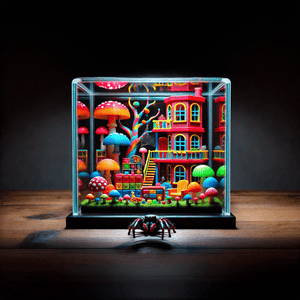
When the Terrarium Turns Into a Dollhouse: Why Kitschy Mini-Furniture, 3D Trees, Backdrops & More Can Harm Animals
Animals are living beings, not accessories. Yet, more and more products on the market resemble items meant for a dol...
Read more
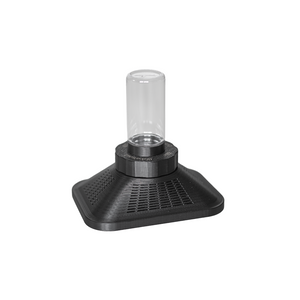
Breeding Drosophila: Guide to Stable Cultures
Drosophila breeding made easy: How to set up fruit fly cultures cleanly, organize them sensibly, and feed them in a controlled way.
Read more

